

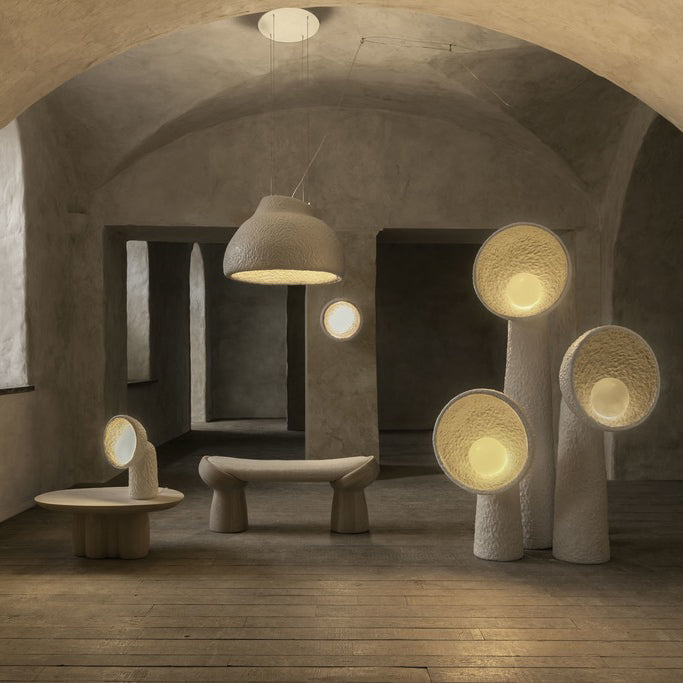
Lighting affects not just the returning atmosphere, but even how the bedroom's architecture, materials, and textures are experienced. Lighting is now a feature similar to a contemporary accessory — the one feature that creates ambiance, adds order to space, and softens the differences between evening and night. The proper fixtures add harmony to a space, lending warmth and diffusion, sculptural quality, and a sense of quiet luxury that reflects the design language as a whole.
Types of Bedroom Lighting
Ceiling Lamps
Sculptural pendants such as the SLUHACH Pendant Light, with its elongated, listening-figure silhouette, create a soft downward diffusion and introduce a quiet, contemplative presence overhead. Meanwhile, SONIAH Ceiling Lamps, inspired by the sunflower, bring warm, radial light that feels natural and restorative, grounding the room in organic simplicity.
Table Lamps
For bedside areas, table lamps offer intimate, human-scale illumination. The SONIAH Table Lamp provides a gentle, diffused glow ideal for reading or unwinding, while its rounded, botanical form adds warmth and tactility beside the bed. Whether placed symmetrically or intentionally offset, our lamps frame the bed and give the room visual rhythm.
Floor Lamps
In larger bedrooms or those with lounge chairs, reading corners, or dressing zones, floor lamps help balance proportions and add vertical warmth. The SONIAH Floor Lamp contributes height and softness, echoing the organic language of the collection, while a GRUN’ Floor Lamp, with its characterful silhouette, can serve as both light source and sculptural statement.
Sconces
Where surface space is limited or a more architectural approach is preferred, wall lighting plays an essential role. SLUHACH Wall Lamps provide ambient or task-level illumination without occupying tables or nightstands, their tactile presence introducing subtle emotion along the wall plane. Their sculptural shapes complement rooms where minimalism and materiality are key.
How to Choose the Right Bedroom Lighting
When you consider bedroom lighting, you will first want to determine what kind of mood you want to create. Scale and placement are equally as important. A ceiling fixture should feel visually proportionate to the room: a ceiling fixture that is too small will ‘disappear’ and a ceiling fixture that is too big will overwhelm. Bedside lamps should provide light at eye level, which will create comfort while reducing glare and aiding in reading or winding down. If your bedroom has a seating area or workspace, consider adding task lighting that diminishes shadows and works well with daylight.
FAQs
How do I choose the right brightness?
Aim for soft, layered illumination rather than high-intensity light. Dimmable fixtures are the most versatile — bright in the morning for getting ready, and low in the evening to support relaxation.
How big should my bedroom pendant or chandelier be?
Choose a fixture proportionate to the room: larger bedrooms can accommodate sculptural, statement pendants, while small rooms benefit from simpler forms. A quick guideline: add the room’s length and width in meters — that number in centimeters is a good diameter to start with.
What is the ideal height for bedside lamps?
The light source should sit roughly at eye level when you’re seated upright in bed. This prevents harsh glare and makes reading or winding down more comfortable.
Can sculptural lighting work in small bedrooms?
A compact sculptural lamp or a minimal pendant can add personality without overwhelming the room. Focus on form, texture, and warmth.
Are dimmers necessary?
Highly recommended. Dimmers extend the functionality of the space and allow the lighting to adapt from morning clarity to evening softness with a single gesture.